Build a Neighborhood Square
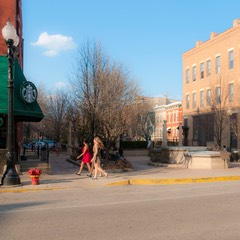
Every neighborhood needs a place to gather, otherwise how can we get together and decide things, celebrate things, or help each other out? A neighborhood square can be really small like the one shown here; a vacant lot or two will do. If they’re already vacant, they’re likely not worth so much that the neighbors can’t pool their resources and buy them. Houses surrounding the square can then be converted into neighborhood services and shops like the single-crew workplaces above.
Who can do this?
What does it cost?
Who can help?
Improve Walk Appeal
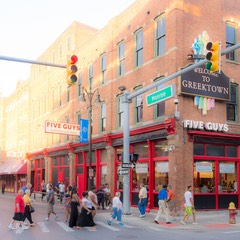
Walkable places are good, but places with Walk Appeal are better. Do we want a meal that is merely edible? No, we want something delicious. Do we want a show that is merely watchable? No, we want one that’s really interesting. So why would we want places that are merely walkable? High Walk Appeal around a neighborhood business can transform it from being on the brink of failure to thriving. High Walk Appeal protects the environment as noted in Get Outdoors. And high Walk Appeal protects us because the more we walk, the healthier and happier we are, and the longer we live.
Who can do this?
What does it cost?
Who can help?
Walk to Work
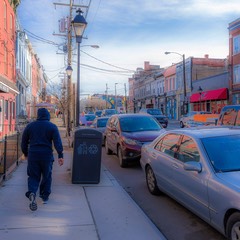
Studies have shown that walking to work instead of commuting an hour a day does as much good for how you feel as falling in love. In the 20th century when most people worked in factories or for other large employers, this was impossible for most. But the bulk of work is done by much smaller businesses today, and it has never been easier to start your own business. Unfortunately, most neighborhoods have few if any places to work because of conventional single-use city zoning. Work with your city to get a form-based code like the SmartCode that encourages small neighborhood businesses.
Who can do this?
What does it cost?
Who can help?
Make a Maker Space
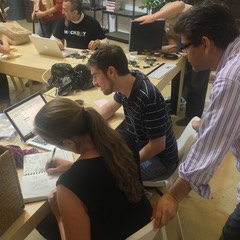
Job training centers are good; maker spaces are much better. In a job training center, you show up and an instructor teaches you a new skill. In a maker space, we all show up and help each other learn how to make things. We all know something about making things, but all of us are smarter together than any of us. A maker space is easy to make; all you need is an old building with water, electricity, and a roof that doesn’t leak. What do we make? That’s up to us, and it’ll be very different things in different places.
Who can do this?
What does it cost?
Who can help?
Teach Young People Useful Stuff
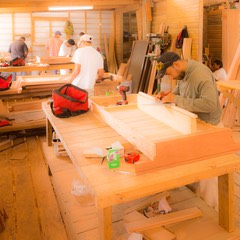
Your neighborhood maker space should be one of the first places to open on the neighborhood square; the next should be a place that teaches young people useful skills. Think of it as your “craftsmanship center." A maker space is perfect for people who are a bit more mature, maybe in their mid-20s or older, but a craftsmanship center is ideal for people just out of high school, or maybe who didn’t make it to graduation and who need a bit more structure. The skills they learn there should be useful in the neighborhood. If most of your houses are wood-frame, then woodworking skills are important. If most of your houses are masonry, then you should be training at least some of your craft apprentices to be masons. If there are several restaurants nearby, you may want to teach cooking skills. Have the young people apply to your program; these jobs aren’t subsidies, but rather opportunities to learn crafts that will make the kids a good income. You may need to get funding in the beginning to get your craftsmanship center going, but once it’s fully established, it should be self-funding from the useful work your students are doing.
Who can do this?
What does it cost?
Who can help?
Give a Gift to the Street
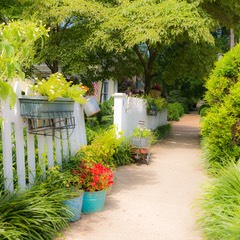
A Gift to the Street can be something that refreshes people (like a street fountain or sidewalk cafe), shelters people (like an awning, gallery, or arcade), delights people (like a beautiful frontage garden), directs people (like a steeple or tall building that gives people a goal to walk to), entertains people (like an interesting storefront), informs people (like a clock or sundial), helps people remember (like a memorial), or that simply gives them a place to rest (like a bench). If every building gave a gift to the street, that street would be a much more entertaining place to walk. And some gifts are so simple you can do them on a weekend; a gift to the street is a really neighborly thing to do.
Who can do this?
What does it cost?
Who can help?
Allow Corner Businesses
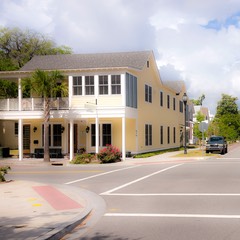
American neighborhoods all over once had tiny businesses on almost every corner so you could walk to the corner for a jug of milk, a loaf of bread, a popsicle or soft drink, or a spool of thread. Unfortunately, they were banned beginning in the 1920s with the advent of single-use zoning. Changing to a SmartCode will solve that problem. And the corner store doesn’t replace the house that’s sitting on the lot; it’s merely built in front of it, right up to the sidewalk. The shop-keeper still lives in the house, right behind the shop.
Who can do this?
What does it cost?
Who can help?v
Open a Single-Crew Beauty Shop & Barber Shop
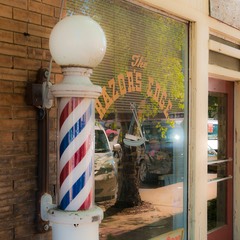
A single-crew beauty shop has one beautician. A single-crew barber shop has one barber. These businesses have been an important part of bonding American neighborhoods together since early in our country’s history, in part because it’s one of the few places where neighbors gather together and simply visit as they wait for their style or haircut.
Who can do this?
What does it cost?
Who can help?
Invite More Neighbors
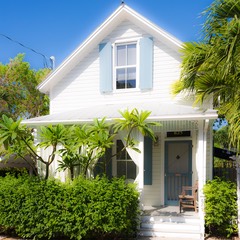
Many neighborhoods, and especially post-WWII subdivisions, don’t have enough neighbors to support neighborhood businesses. The businesses you can walk to will stand a much better chance of doing well if you have at least 5 homes per acre. At 10 homes per acre, they’re likely to thrive. Where can we put these additional homes? The American construction industry has built mostly houses that are over 2,000 square feet for decades, at a time that the average American household has been shrinking to today’s average of around two people, with many single-person households. These households would be better served with homes that are substantially smaller and therefore less costly to rent or buy, and to heat or cool. Smaller homes can be added to existing neighborhood in a number of attractive and interesting ways that would be impossible for larger homes.
Who can do this?
What does it cost?
Who can help?
Build SmartDwellings
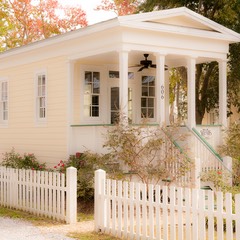
Project: SmartDwelling began in the aftermath of the 2008 Meltdown to redesign the American home to satisfy the same resident in half the space by building smaller and smarter. SmartDwellings cost about 60% of the full-size house because they’re more expensive per square foot (because they’re built better), but they cost only 40% of the full-size house to heat and cool because they’re more efficient. The more SmartDwellings you use in an existing neighborhood, the easier it is to fit them in when you invite more neighbors, as noted above.
Who can do this?
What does it cost?
Who can help?